-Glimpse 1- This morning after meeting #1 the subordinate and I went to talk to BRORB about getting a car to go to the woods. Clearly she was busy at work, because she was reading a blog online entitled How to Catch a Salmon. Of course we had to hassle her about this. We found out it was because there is an upcoming meeting with the bigwigs of the FS. And that meeting is a salmon fishing trip. Because that's just how they roll out here. Although admittedly in SC, deer hunting was a prime meeting territory for FS bigwigs. We actually had to learn how to clean deer and how to navigate food plots- not so much for wildlife management, but for networking.
-Glimpse 2- After lunch, Subordinate and I went to another meeting, which we were a bit early for... we were told to wait at the front desk because the forest service employees hadn't finished their yoga session yet. Yes. The hardcore salmon fishers also have a daily yoga time.
I'm not kidding. This is where I live. I love it!
... and on a side note, you can listen to NPR's All Things Considered streaming online! This discovery has just made working long hours at the computer significantly better. I do love NPR, but All Things Considered is my favorite of the NPR programs-- it has so much variety and really interesting interviews-- everything from book reviews to national news.
... and on another side note my Subordinate is going to China this summer for three weeks to dig up mushrooms with his fiancee. OSU has one of the top mycology programs in the nation (I think maybe Berkeley is more famous as a mycology school) and they are looking at similar fungal climates across the globe. Apparently its some sort of ecological study based out of a city in the southwest that will send them to several different cities across the country. I thought this was a very cool project (although it is not his project). Come on OSU! Send me abroad, too!
Tuesday, June 15, 2010

I had a revelation this morning, and then I accidentally removed most of my toenail
I couldn't think of a better title. Don't worry, my toe is OK. But maybe I shouldn't try to cut my toenails and think at the same time. Blonde hair has its downsides. It'll grow back.
Anyhow, so I was thinking this morning when I woke up, which I think was spurned by the fact that my damn blender broke and it was going "EE" every time I tried to blend my marionberries into breakfast. I was so annoyed at it, because my heart was all set on having marionberries and now I had to subside for the second best thing, a banana, which tastes nothing like marionberries at all. I bought my berries frozen and without a microwave, heating them up is kind of a slow process, especially since this is Oregon, so it's about 45 degrees out in the morning in the summer. Anyhow, I had my banana (and some raisins) and I drove to the EPA building thinking to myself about the giant frickin' cow that I saw this morning while running. I don't think I've ever seen a cow up close that wasn't a bull in Germany that I was running AWAY from. These were safe cows, behind fences, and most importantly: udders, not horns. I realized also as I was running: the field behind my house is most definitely a wheat field, not a grass field as I imagined earlier. The grains are developing on the grasses now and it's very evident that it will be harvested later in the year into wheat products.
I guess the synergy of all the three things made me think: first, the cow was very endearing, and it was (alone) on a field about the same size as the giant wheat field. The giant wheat field was just full of waving grasses. And I was upset about my marionberries. Suddenly I felt really like a huge jerk. Here I was, upset because I couldn't have my special kind of cross-blended-Oregon-extravaganza berries. There was a cow, using up a whole field. And there was a wheat field, growing plentifully. I felt sort of ashamed at myself, and at that culture I haven't come to shake completely; I, like whoever put that cow on that field to make meat, was not thinking of my own luxury as above communal economy. I wanted something special, when the fact of the matter was... there was something plentiful all around me. Fail economics lesson number 1.
Now, I'm not saying eating cows is bad. I've certainly eaten my share of cows. And I know that many cultures rely on cow products for food. But I'm saying that the cow caused something to came to my mind, and at least was a lesson in humility, and I can say for certain that I definitely need my daily dose of humility because I have way too much pride, so I guess it was good. So I blog about this so that I will remember it and think about it, as I am doing now.
I guess what I'm saying is, I can go to the Fred Meyer and walk down an entire AISLE of just various flavors of chip foods. But there are places in the world where people can barely get by. It was very humbling.In fact, I was so astonished at this thought I nearly cut off my toenail, and the story ends where it begins, eh?
Anyhow, so I was thinking this morning when I woke up, which I think was spurned by the fact that my damn blender broke and it was going "EE" every time I tried to blend my marionberries into breakfast. I was so annoyed at it, because my heart was all set on having marionberries and now I had to subside for the second best thing, a banana, which tastes nothing like marionberries at all. I bought my berries frozen and without a microwave, heating them up is kind of a slow process, especially since this is Oregon, so it's about 45 degrees out in the morning in the summer. Anyhow, I had my banana (and some raisins) and I drove to the EPA building thinking to myself about the giant frickin' cow that I saw this morning while running. I don't think I've ever seen a cow up close that wasn't a bull in Germany that I was running AWAY from. These were safe cows, behind fences, and most importantly: udders, not horns. I realized also as I was running: the field behind my house is most definitely a wheat field, not a grass field as I imagined earlier. The grains are developing on the grasses now and it's very evident that it will be harvested later in the year into wheat products.
I guess the synergy of all the three things made me think: first, the cow was very endearing, and it was (alone) on a field about the same size as the giant wheat field. The giant wheat field was just full of waving grasses. And I was upset about my marionberries. Suddenly I felt really like a huge jerk. Here I was, upset because I couldn't have my special kind of cross-blended-Oregon-extravaganza berries. There was a cow, using up a whole field. And there was a wheat field, growing plentifully. I felt sort of ashamed at myself, and at that culture I haven't come to shake completely; I, like whoever put that cow on that field to make meat, was not thinking of my own luxury as above communal economy. I wanted something special, when the fact of the matter was... there was something plentiful all around me. Fail economics lesson number 1.
Now, I'm not saying eating cows is bad. I've certainly eaten my share of cows. And I know that many cultures rely on cow products for food. But I'm saying that the cow caused something to came to my mind, and at least was a lesson in humility, and I can say for certain that I definitely need my daily dose of humility because I have way too much pride, so I guess it was good. So I blog about this so that I will remember it and think about it, as I am doing now.
I guess what I'm saying is, I can go to the Fred Meyer and walk down an entire AISLE of just various flavors of chip foods. But there are places in the world where people can barely get by. It was very humbling.In fact, I was so astonished at this thought I nearly cut off my toenail, and the story ends where it begins, eh?
Monday, June 14, 2010
Why I really should remember to change my oil before a long drive
I don't think about it much, well, okay I do think about it much, but San Francisco is kind of far away. Not that far, but far enough that I should probably check my oil before i drive. Right, I know, truly I am like Einstein and can barely remember to wear socks, but hey, at least it is like Einstein. But I should really check my oil. Maybe even change it. Damn you miniserve-- I forget because I don't have to get out of the car at gas stations anymore-- my routine is off. Anyhow, it's sort of nerve-wracking to be driving through the balls to the wall hot Sacramento valley with no rest stops for the next 1000000 miles (roughly until you hit a near earth orbiting object) and thinking, well, I am not sure if my car will make it, and if I turn on the air, I am really not sure if the car will make it, but at this heat I am not sure if I will make it. Hmmm... to dehydrate or to explode. The choices are yours and yours alone (and if you make it through the hidden temple than on the other side you could win this great prize! <-- Nickelodeon, anyone?)
Of course, I made it and notably just past Medford the temperature went from a "I think I might die" about 100 degrees to a nice 73 degrees. And in Corvallis it was in the mid-60's, as usual. I woke up yesterday feeling like death and wondering why I couldn't cool off even though it was only 58 degrees in the morning time. Fan-vestment made this much better as well as drinking about 10000 liters of water.
I woke this morning will all my windows open thinking, well, FINALLY the temperature feels just about right. Come to check the thermometer and it's 43 outside! How wonderful! Clearly I have acclimated to cool weather just in time for summer, right? Running through the farms in North Corvallis among the fertile grasslands and feeling tempted to pick random blueberries and strawberries along the way, I was (although I do love California) glad to be "home." I think maybe I've just got a little bit of mountains in my soul or something. There's something about all the greenery and the cool, fresh air that really just makes me feel like I am in-synch with the world. And I don't mean that like the teeny-bopper band from 1995. I mean, it is just so nice to feel "cool" when I step outside, and to see the maritime layer slowly drifting overhead towards the Cascades, knowing that I'll have this beautiful, spotted sky morning and an afternoon drizzle, and a sunset that would 18th century poets jealous. I am sure that if I have to fully acclimate to CA at some point in my life it will not be the end of the world, and I can certainly see myself adjusting to having to see the ocean every day, but there's just something about green hills and mountains that makes me feel happy and alpine. It's like I'm back in Germany again...
I have this song in my head, which is by David Crowder Band, called "glorious." I was thinking of it as I ran along in the farms, because it's sort of a great chorus to the West in reference to it's nature. It's kind of dumb and just a series of 3rd grade rhymes, but I like it:
"The day is brighter here with you, the night is lighter than its hue, which leads me to believe... which leads me to believe... you make everything glorious, you make everything glorious..."
You know, the woods and the grasslands are nice no matter where you are (even SC, it is nice to be up in the woods or out in the meadows, or at least, preferable to not being in them), but out here it's just so much more extreme. And in Brisbane, on San Bruno mountain, running through the dry oats and by the mystery-holly, it is the same-- well, it's different because you are in massive pain from the hill, but overall you are happy... your skin just feels better... that may sound stupid. But it's true, you know, and when it's nighttime and it should be terrifying, like in SC, it's not really... it's just sort of peaceful. Here and in Brisbane. Here and in everywhere I've been out here. I feel like the night is what it is supposed to be here, not scary, but restful. "A great, warm curtain goes around everything-- has always been there, will always remain." Did I mention William Stafford is from Portland? And that his family is involved with the Andrews writers project? And am I even the slightest bit surprised to find this out? ... :)
My windows are open and I am drinking about a pound of frozen marionberries and blueberries from a nearby farm blended into the best local and organic smoothie known to mankind. It's about 50 degrees out. I am chatting with a GIS person from OSU via email about the best way to set up transects. I can hear (although I can't identify) a bunch of birds outside. I mean, this is my job! Talk about the landscape, be in the landscape, learn more and more. I never thought growing up that I could just be sort of happy where I am and who I am.... but I think this is it.
Wednesday, June 09, 2010

Tuesday, June 08, 2010
I got a feeling
that this driving test is going to be really hard. All these questions are about driving in snow! Come on, OR... I know it snows in 2/3 of you, but 2/3 of the population lives in the corridor! I do not know what legislation enforces the use of snow chains!
On a side note, did you know that the road is "most slippery" when "it is icy, and the temperature is near freezing?" I would have said, "it is icy, and the temperature is at least 15 degrees below freezing"... but what does evidence (Dixie National Forest) and units of measurement (just how exactly does one measure "slippery") count?
On a side note, did you know that the road is "most slippery" when "it is icy, and the temperature is near freezing?" I would have said, "it is icy, and the temperature is at least 15 degrees below freezing"... but what does evidence (Dixie National Forest) and units of measurement (just how exactly does one measure "slippery") count?
Monday, June 07, 2010
No tiers, no tears
This week in my email I have gotten some notices from our department head about this program they do here called the Safe Space Program. I have seen signs for it all over campus, the city, and even in Salem. Apparently people, businesses, etc. can all participate in these workshops in order to get placards for their offices that say that they are friendly to people of non-traditional sexual affiliation. I know, I know, I'm definitely not of that persuasion myself. But I've had friends that were, and I've seen a lot of people semi-persecuted by traditional groups about their choices in this manner, and for some reason it's really very sickening to me. So I think it's very cool that our department head openly invites people to be a part of this program, and moreover, that many people responded to the need to participate.
Maybe I've still got too much residual southern-ness left in my mind, but it's really beautiful to see how non-judgmental people are out here. Wow, "judgmental" doesn't have an "e" in it? Strange. Anyway.
I was thinking for the past few moments about how I think this is one of my favorite things about OR, actually. One thing that impressed me a lot about the trip out here was that no one tried to show me a "good time" in the traditional sense. It was much more humble; stay at BRORB's place, with no heat, eating food from the garden and making 11 espresso shots in the morning, learning how to wash mushrooms "the right way" and hiking around campus in the rain with people I had never met, generally just a very "down to earth" kind of experience. I think it really characterizes the place, though-- it's just very down to earth. Also I have noticed that no one really "looks down" on grad students condescendingly. Sure, the professors are obviously smarter and more experienced, but they seem to be much more apt to take the role of friendly guidespeople. Which actually makes them seem much more wise than condescending professors...
OR has a lot to offer with it's awesome landscape and all, but I think that maybe it's biggest selling point is the attitude... maybe it's the rain or something.
Sunday, June 06, 2010
I didn't sleep well last night
I was worried about stuff so I woke up feeling like a pile of poo. So I decided to take the day to have an adventure and I hiked up Mt. St. Helens! It was very neat! Glad to be home, now, though-- that road was really rough and a little scary at times.
*edit: I didn't hike up the whole thing. Just a little part.
x2 just got an email from JoA that our article is past the first round! One more to go, I think.
Saturday, June 05, 2010
Today I watched Ironman 2...
... while highlighting the data for this project. No, I'm not kidding. I put Ironman 2 on one screen and Excel on the other. I held down the mouse button for 94/112.5 minutes, only to find that 94 minutes of data (even though it was just one vector! I didn't even do the other columns) was too much for the computer to "copy."
I mean, there is nothing like a little good ol' fashioned copy paste to make you wish you could just press the little "select all button" without killing your computer.
Just another description of the land...
One of the programs we run in the forest is something called the Long-Term Ecological Reflections Program. It's a program designed to teach humanities majors how to do science. Apparently, selected humanities majors from various schools get to come to the woods with regional authors (big time ones, like Kim Stafford, wow!) and help us collect data, sort of like the Christmas bird counts, but on a much smaller scale. Additionally, they are alloted times and places to go into the woods and "reflect" in writing about the woods, so that they can get humanities credit, as well. I think it's a neat idea because it helps to bridge that gap between loving nature (who doesn't!) and learning science (I didn't know crap about science as an English major-- sampling? what's that?). The guy who runs the program says that he keeps a repository of any works about Oregon reflections that these students write. I like that point. Nature writing, although not science, is a nice popular bridge to science. I think it's good to write about what we see in the environment and how beautiful it is. Maybe it was in one of those Malcolm Gladwell books where he talked about the snow-covered mountains in Montana. If you went every year to look at the mountain, you wouldn't notice the snow-cap receding. But take a 25 year break and when you come back, you'll know that its gone. Nature writing serves as an accessible "jog" for ecological consciousness; it's a reminder that the world is big and good, but fragile and precarious. Which is why I will write this, so that I can remember it.
She, of course, was referring to the perpetually complex, cloudy sky that enshrouds the corridor. I told her that in other places of the world, we wish we had that nice cloudy sky instead of frigid winter days and humid, mosquito-ridden summers.
"I'm from Long Island," she said (I'm not oblique, but she had no accent of long-island-ish-ness). "Fred's from Dover." It was sort of an "I understand" statement, empathizing with the silly weather that dominates the Atlantic shore. We shared a sort of warm-eyed moment of conversion, the kind that you see people get after a long lunch with an old friend.
"I'm sorry," I said. We laughed. But this is not the point of the story.
Summers in Oregon have been described as being the best summers in the country. I'm not sure where I heard that and it could have been in some pro-Oregonian propaganda, but you know what, as the joke goes, 99% of statistics are made up on the spot. Again, tangent. Even if they aren't REALLY statistically, "the best," they are relatively clear, cool, and we don't have mosquitos here at all. Or at least that is what another forest-y friend told me. So, on those merits alone they certainly beat South Carolina. No more ticks trying to get their "Twilight" on.
So yesterday the summer season began. I had spent quite a long time staring at some data trying to make sense of why I was getting an autocorrelation signal in the DEM_10 slope and elevation data. My brain was fried, so I decided I would drive over the Willamette to the little town of Albany, which isn't particularly impressive as a town, but the Willamette bridges are very cool. They're all made of.... I don't really know what this is... that structural looking kind of steel, and of course since Oregon is bike-friendly there are plenty of walking paths. Sounds like a good, free way to spend an hour or so. Well, my drive to Albany took me towards the Cascades (in a general eastern direction). One of the few things I didn't like about my house when I first got here was that I couldn't see both mountain ranges. Then I realized that if I went out on Conifer and turned left(to Albany) not right (to Corvallis), I came out on the eastern side of town with the Cascades in full view. Those things are so magnificent that even on a cloudy day I can see most of them. But on a sunny day... wow... it's like they just go back forever. I could see back to the ones with snow-peaks on them.
I was intending to come up with some really good description for this, but I can't really do it very good justice. So I'll just give it a crapshot. I guess it sort of looks like the Badlands how we saw them, on a semi-cloudy day. There's a bunch of field and then there are layers of pale color where the sunlight is coming through the clouds and hitting the mountains at all different angles and on all different surfaces.
One of the best things about being a forester, although I guess technically I'm an forest ecologist now (I like that much better, to be honest-- more loving, less chopping), is that my job is literally to figure out why beautiful places are beautiful. So going to a national park or a walk in the woods, that's "work" for me. Everything that nature does it does for a reason. Form fitting function. BRORB called ecology a "fractal" once, and I think (knowing very little about fractals) that this is a great description-- the complexity remains on every level you look at. So let me tell what I saw from the point of a forest ecologist, which is part of why it is so beautiful to me. Looking to the east, I saw the Cascades in deep-glory. Much of their rock is andesitic, which means it's from volcanic origin, mostly red breccia, green tuft, and black basalt. So the colors of the stone are bright, and very from being very coarse looking to being vitric. As for the trees, there are some hardwoods, mostly alders along the streams, but the majority of the landscape is the dark green Douglas-fir on the ridge tops, and western hemlock (the more "heavy looking" evergreen tree) on the side slopes. There is also the Pacific Yew, it's a sort of furry, skinny tree that looks very Triassic. It makes me particularly happy because it is a medicinal plant. And then of course sword blade fern, Oregon grape (the yellow flower, you also have it in SF, that grows on hills), and salal ivy in the understory. So imagine, all these shades of green and black and red, being hit by literal rays of sunlight that are breaking out of purple clouds. And then add to that at least four rainbows... I'm not kidding, there is sort of a perpetual mid-afternoon rainbow thing that goes on to the east side of the corridor. I guess when the afternoon clouds pass to the Cascades and the sun breaks low in the western sky, it hits the rain just right... but that's just a guess. Or maybe it's magic. I don't know. Maybe I'll just say it's magic for my own sake of wonder. You know, it's sort of like looking at my Excel spreadsheet of data-- you can see a set of numbers on the sheet and say, well, that's a big tree, or wow, that percolation pattern sure looks complicated, but until you see the tree or write out that big honking equation, you don't really see that sort of overarching glory and order. I can see how being really good at mathematics and being into ecology are similar; the idea of having some beautiful partition function or old-growth doug-fir that summarizes just a mass-load of data kind of carries across. To me, this synopsis in tangible form sort of makes me feel a relief, sort of an "ah, yes, you know, I think that this whole world makes some sense after all." I get the feeling maybe deep down the whole "tending toward entropy thing" is fundamentally scary. Finding order in disorder brings relief; finding hierarchy or pattern above order brings enrapturement. A lot could be said about the "system" to this theory, but for another day.
So back to the afternoon. There was only one thing to do. Take full advantage of the sun break and go for a Cascades tour. I should mention the other glorious thing on this journey, which is not the Cascades, but actually the farms. Other than the brief post-college stint in Atlanta, I've been living within eye-shot of farms for about eight years now, and I've come to really appreciate them. Even the ugly ones in SC are a good reminder of the agricultural industry, and the fact that the bulk of America is still largely used for agriculture or rangeland. I would take a farm over a suburb anyday. Here, the main crops are grass, orchids, mint, and berries. So our farms are just these waving, brilliant green grasslands, sometimes spotted with yellow dots of orchid buds or purple and blue berries. There's a clover farm a mile or so up the road that is filled with white clover blossoms. So all up I-5 there are these undulating green lands, with maybe the occasional old farm house or half-run down irrigation equipment filling in the idealism. (Yes, I realize the irony of having irrigation equipment in OR, too. I have no idea why it's there. I know nothing about growing non-woody plants, except that I like to eat them, and horses do, too. Thankfully, correlation does not necessarily imply sameness).
Occasionally, the green farms break for brown, rocky soils. BRORB told me that Oregon looks almost exactly like Greece (I wouldn't know) and that, like Greece, the brown, rocky soils have deep underground resevoirs that make growing grapes and nuts possible. Another major crop here is hazelnuts, so interspersed between the green fields are just rows and rows of hazelnuts (filberts) trees. Now imagine taking this in at 65 miles per hour. It's just a sensory rush. And then you look up ahead and there are two snow capped volcanoes-- Mt. Hood and Mt. St. Helens-- just hanging out on the horizon, kind of saying, hey, we made it like this. We made this fertile soil when we blasted a bunch of rich minerals right out of the ground. And the Willamette and its tributaries are babbling cleanly along the side of the road. It's sort of arguing, you mountains, that was all me and my silty deposits. Well, you can't hear the babble as you drive, but you know it's there. You can smell it. And that river does seem kind of boastful.
So this is where that joke comes into play-- my forested accomplice noted that an Oregonian can find a volcano without ever being able to see it. That's a nice joke and all, but the truth is, this place is so fertile and stunning that even two volcanoes seem to be a trivial afterthought following a description of the land. Once I was in a music class in high school and we played a piece called Cataclysm. It was this caustic symphony dedicated to the St. Helens eruption. It was dramatic and fast, a very exciting piece. The next year, we got this tremendously slow (and much more famous) piece called "The Planets" to play. Cataclysm was cool, but The Planets was mind-blowing. I guess it's sort of like that, a beautiful landscape, it's a slow ode to order in an entropic world.
Friday, June 04, 2010
Watershed!
 See that stream ^^, that is where I work. The forest up here is mind-bogglingly beautiful. Which is not REALLY a word, but you get the idea. I'd say the environment looks very similar from a distance to the area around Shasta, but when you get into the forest it's just filled with ferns, moss, and these babbling streams over volcanic rocks. Our area doesn't get any snow, but snow caps the mountains at the higher elevations. As the director of NSF affairs joked with me, "wow, I think you have chosen the best place ever to HAVE to do your research" I couldn't agree more.
 I was thinking yesterday about the crowning achievement idea. I guess somewhere in my heart I wish and have always wished that I had a life-long goal that I took a straight towards. I had a friend who wanted to be a vet since she was 3. And now she is. Or my father, wanting to live in Atlanta, where his mother is... and he does. Or some people ( :) ) who made it to California after working so hard for seven years. It took me a bit of reflection to realize, I am in awe of this kind of dedication, so much that I am almost jealous of it. Okay, maybe I am jealous of it. Which is OK if it spurns me to action, but needs to be acknowledged and controlled. Like anything. I am very stubborn, and I've got to watch myself from being a big asshole, especially after a DMV encounter. I think to myself, if I could dedicate that kind of time to a goal, I would be a successful person. I get angry with myself for not having ever had that dedication, only aimless wanderings. I never said when I was younger, "I want to live in western Oregon." In fact, I think I only really acknowledged the presence of Washington, and I did have a fascination with Puget Sound, but certainly a goal of Oregon was not really in the books.
For me, it's more about remembering a little of the past, I guess. When I was really little, about five or so, we had a house in the Appalachian mountains we used to go to every weekend. We only had it for a few years, but I remember I was really struggling with OCD at the time and therefore having trouble in school with the teacher (it's kindergarten, eh, not that much work). I really had my first distaste for EC then-- at home I could be "smart" and do kitchen top experiments and my father would teach me all about radio waves (to no end did I hear about why AM waves were a poor choice for the mountains)-- but in school I spent a good bit of time in the corner because I couldn't deal with the texture of laying on my kidnapper during naptime. It smelled like hotdogs in there to the point of distraction. At the mountain house, there this wet, mountainy smell everywhere (yes, probably mildew) and I could wake up and go outside and just run through these sumac woods under the pine canopy. There were snails everywhere, and trails, and trees to climb, and just stuff everywhere to explore. I guess an analogy would be that EC would be kind of like milk, and the mountains would be kind of like a fine wine-- complex and biting. In my mind, mountains in general were synonymous with freedom, which is not to say much, since I was 5 and clearly my senses were not refined. Still, it was engrained in me that when the sky is heavy and it smells of firs (all Abies smell the same IMO), the world is sharper and better.
As a "grown up" I say that forest is a pinnacle for me-- since I escaped UGA I have been trying to do anything I could to work in nature. Specifically in the woods. I have expressed that to me even the eastern woods have a complex story to tell; they are not beautiful, but they do spin a great tale! When I left UGA I applied to 147 jobs ( I counted) until I got one of them... my boss had never gone to college... I remember him telling me, "if you do well, one day you could have your own store in a mall and make 40000 a year." Geez. Rog gave me a wake up call and I sat down at the basement counter and I wrote out "Mission Mountain"-- it was 2007 and my goal was to be in the mountains by 2010. I guess it worked out, although in a truly K manner it worked out much more because of fortuitious circumstances than because of hard work. As much as I'd wish I could say, leave it to fortune and let work be damned, the fact is, both are important, and work moreso.
The point of this long ramble is this: in the picture above, there's a beautiful stream! I live there. My job is to go out into the woods and learn more about them-- how they work, what story they tell, how they look, what their jobs are, who do they associate with? In some metonymic way, I see myself in the Appalachian mountains, watching a slug break down a leaf. That's my job-- listen to the story that the mountain forest tells! And that... is just plain awesome.
Thursday, June 03, 2010
With our powers combined...
Apparently, happiness is earning $60,000 a year. And, with our powers combined, we're at...$51,000 a year. Pretty close! Now, the trick will be to actually live in the same area (or even the same state!) so that we can purchase some happiness...
(Random thought of the day: my little brother makes more than me and my wife, combined. Well...dang.)
(Random thought of the day: my little brother makes more than me and my wife, combined. Well...dang.)

:vent::
Hmmm... this morning was one of those kind of mornings.
First of all. It was sunny.
So I was just enjoying my new bed rather throughly and had the windows drawn, effectively blocking out Oregon's best alarm system, the glowing morning sky (I'd say "sun," but really even a "sunny" day means, well, about 20% of the sky is blue). Late for me, at 6:39 am, I awoke. Today I was planning on getting my license changed to OR. Which means, of course, I had to beat the DMV rush. I had planned on getting in a run at 5, as I usually do, but clearly I've been up until 2 am for too many nights building furniture and reviewing trigonometry (damn me for understanding the proofs for cosh and sinh at 1 am!) So instead I rushed to the DMV for some queue hopping. Of course, the line was already forming when I got there. I have no idea why, but I feel like DMV's are always extremely busy-- even when they are not open, they are busy.
I take my spot in line, only a few people back, and I wait. I have a 10:30 at work to get to. Luckily I am person A3 (so creative with numbers there, huh?) and get to the front quickly. I have brought with me the manila envelope of life, which contains every single valuable document I have: birth certificate, passport, registration of car, insurance cards, documentation for legal assistance with the accident I was in a few years ago and the renewal of charges against me, medical forms, you name it, it's there. I get to the front to talk to the lady.
"Where's your car title?" she asks.
"Well, it's in my safety deposit box," I tell her.
"Why is it there?"
"To keep it safe."
"Well, you'll need your title to change your registration," she tells me. Okay, fine. Well, it's in Atlanta, in Decatur to be specific. It's been there for as long as I can remember, because we've been banking with Wachovia since we lived in Decatur and never changed our boxes. Was I planning on getting the contents of my box forwarded to Wells Fargo up here? Yes. Had I done this yet? No. I mean, my parents haven't changed their boxes from Decatur in the past 25 years! Clearly we are not on the game with safety deposit boxes.
"Okay, well, it's in Georgia," I say.
"That's okay. We can do the license now and you can come back for that later." That's a little inconvenience, but I figured that I could probably get that done in a lunch hour, since it's just returning some forms. In fact, I saw the same forms online, and was sure I could just mail some copies in. Doing it in person would be nice because I could do the emissions test at the office, but heck, emissions tests are the same no matter where you go.
I pull out my GA license, birth certificate, passport, marriage certificate, SS card. And a blank check, because I know it will cost me. Little did I know...
"I need a proof of residence," she says.
"Right, okay, here's my lease."
"This is a signed copy," she tells me.
"Yes," I reply. Really? I hadn't figured that one out.
"We need the original lease, or a work order for bills in the mail, or a credit card bill, or your vehicle registration." Now how that works is beyond me, since you have to be a resident to register your vehicle... Somehow, though, this made sense to her.
"Okay, well, here's my work order from Qwest," I tell her, pulling out the documentation I received in the mail. It has my name, address, account number, even my WPA code. Woman, don't you steal that!
She looks at it for a moment. "They didn't install your modem."
"Nope, they just mail it to you and you plug it in. Self-installation."
"I can't accept this if they didn't come to install your modem," she replies smugly.
"So you are telling me, if I let someone come to my house and install my modem, you could accept this, but you can't accept the work order with my account number and name and address."
"Nope," she grins. It is her joy in life to make me miserable and annoyed. "What about a delivery?" Oh, she asked for it this time. I have just the thing for you, Ms. DMV.
I go into the trunk. The boxes from the desk at IKEA are in there. To be an annoying person, I pull out the largest box and drag it into the office. It's at least 7 feet long and about 3 deep. It's been compressed, but I am sure to unfurl it.
"Here's my name and address," I say, pointing to the UPS label. I lay the box all over her desk top, being sure to move her pens around and knock about a few papers. If she hadn't taken such joy in my unhappiness maybe I would have been nicer, but clearly this was a little extreme, so I felt like she deserved a bit of annoying. Hammarabi's annoyance or something.
"That label was printed by UPS," she tells me. "You need a hand-written label." Oh, good. Because everyone uses hand-written labels now-a-days. Especially UPS. It's so convenient. Everyone is doing it. I feel tempted to go to the car, peel off the UPS label, and write myself a label on the box. Clearly she would figure this out, though. "You could bring me your credit card statement."
"I bank online," I tell her. "Reduce my carbon footprint." (That's Oregon slang for "see, I am one of you!") It was the last trick in the book, and it usually works well. At the produce stand, you say that and they give you a discount for not using a bag! Say it to a professor and they look at you like you are smart. Go downtown to the outdoor outfitters and mention carbon to fit in! Apparently Ms. DMV doesn't care about carbon, though. I guess she likes a heavy footprint.
"You need an original copy of your credit card statement, from the company."
"So you are asking me to change all my preferences, wait for my next statement to come in the mail, and then show this to you?"
"Yes," she tells me, as if this is something that anyone and everyone should do. "Do you have a selective service registration?"
Oh, sure. Does the Forest Service count? What about the you've-got-served service? "I mean, what do you really want me to do about this?" I ask, completely frustrated.
"If I were you, I'd go back to my lease company and tell them that you need the original lease. Bring that up here. Sterling is just right up the way." Yes, but Sterling is open for roughly .002% of the day, since this is, after all, OR, and people do not go to work at times when it would be more fun to go outside biking... which means anytime before 12 or after 4. All I want is to be a Pour-Again-ian!
"Go ahead and fill out this form for your name change," she tells me, and at least we'll have that on file. I fill it out, not too light-heartedly-- it's a big deal to change your name. Goodbye, Switzerland. There's a lot of random stuff on there, just as paperwork always is. Why do you need my financial information for a name change? I am not sure. I bring it to the counter. "Oh wait," she tells me. "You can't change the name here without an official court order."
"I have marriage license. That is from the court," I tell her.
"Yes, but it's not a court order."
"It is a notarized court form," I tell her. "What else do I need?"
"A court order."
"You've lost me."
"If you want to change your name for marriage, you need to do this paperwork up in the capitol (Salem) and bring it here, or just take it to the DMV in Salem."
GREAT! SALEM! I LOVE SALEM!!! I LOVE DRIVING EXCESSIVE DISTANCES (> 30 miles!) JUST TO DO WHAT I COULD DO 1/2 MILE UP THE STREET.
I take the papers and I leave. I need to be at work anyway. To assuage my pain I go to the produce stand. They sell Stumptown coffee there... and I REALLY need it, even if it is kind of pricey out of Portland. Once out of the DMV Oregon is back to it's general awesomeness. Therefore I conclude with a=0.05 significance that the DMV is in fact an outlier and should be removed from the statistics of Oregon's correlation with greatness. I chug my Stumptown in the car, proceed to find parking (and am glad to know I can still get free spots even at almost 10 am) and dash to the office. Why hello. Good thing it's free coffee Thursday... I need some more of the good stuff.
I think it is a fact that DMVs are the unhappiest places on earth. Well, those and the lobbies of mid-range hotels.
And then there's news in Portland
I've listened to weather forecasts before, but I don't think I've ever listened to a poetic weather forecast.
Well, hello, Portland.
This, of course, comes from what might well be my favorite newspaper... in fact, I am tempted to get it just because I like the writing style so much. I quote from this articles news-blip, "... including the wettest May-- wetter than Astoria!--" to show the random spunk that gets thrown in the Oregonian's regular journalism!
Or try on for size the random news about Oregonians being the country's "second best" drivers:
Notice how the hyperlink goes to "that's right, Oregonians are sma--" (which is for smart).
For real fun journalistic adventures, you can even try out the page on "opinions."
God, I love this state! I am proud to be an Oregonian...or soon to be one!
On a side note, for some reason I have been in a bit of a Samuel Taylor Coleridge mood recently, maybe because a guy in the forest and I got into a long discussion of "what was the best decade for American literature," and although I would probably say myself, 1920's or 1970's, this guy was much more inspired by the mid-to-late 19th century writers (figures, that is the Walden times.... Walden being Thoreau's popular book about his nature adventures that actually occurred right in his own backyard--- literally, he went home so mom could do his laundry each weekend-- read it people!)
Anyway, without further ado, if you feel the need to read some Coleridge and really see what is one of the beacons of assonance/consonance, I encourage this.
For example, the first paragraph, you can almost see the "a" sound running through the text, slowly morphing into an "e" sound-- it's sort of an American stylistic thing, but what it does is it unconciously tells us to make "units" out of areas of the text. It changes the flow of that paragraph.... a little secret of poetry reading, if you will, is that you do not stop at the end of each line as you would in a song. Keep moving, naturally, like it's a paragraph, but take not of the line breaks in your head or if you are reading outloud.... read poetry like this and it's no longer flowery and terrible (sometimes it still is) but it's sort of like a music or something... okay, well, clearly I need my rain now.
Tuesday, June 01, 2010
If I could have a penny...
If I could have a penny for every bit of data that is randomly floating around the PNW that relates to the carbon budget... I would have a lot of pennies, but I wouldn't be able to find any of them.
Sunday, May 30, 2010
In the spirit of academic musing
It is my hope that by blogging I am going to come up with some ideas.
So here's the general premise. We have a basin. That's the "biggest" measurement for essentially, a valley with a river/stream in it that all tributary streams drain into. These tributary streams, even down to the littlest ephimeral (short-lived, maybe only a few weeks) streams, each have their own "mini-basin," if you will. There are, of course, terms for all the sizes of basins, with the size of basin we will work on being about 10 km^2, which qualifies it as a watershed.
In this basin we have transects. Transects are sampling "lines" that have been put in by researchers; they usually run along the paths of easiest access and are generally parallel to one another. The amount of transect lines is determined by the amount of plots per line (and the size of plot) which usually comes from a calculation for desired sampling intensity. These intensities are usually not very big; at Clemson, we aimed for somewhere between 1.5 and 3 %. Then again, that was very standard terrain, with large portions of the samples being loblolly plantations.
At each point on the transect, a circular plot is constructed through the very high tech (not) method of the BA prism. Essentially, you take a prism out into the field with a desired diameter, stand at the middle of the plot, and look at every tree on that plot. If the tree through the prism, is not "disconnected" (you look at the trunk), then the tree is considered "in" the plot and measurements are taken. If the tree is disconnected, you do not consider it "in" the plot. The idea is that by measuring the trees counted "in" and out by the prism, you get the right distribution of smaller trees (which will be "in" when they are closer to you and not in when further) and larger trees (which can be "in" at further distances) for an expansion of the data from your plots to reflect on the samples as a whole. This sounds tenuous, but many foresters in the 1960's made their fame by calculating this way versus total enumeration (oh god, say it isn't so) and finding no significant difference.
Well, our plots are different here, a bit. First of all, they have more variation, and second of all, there are sensors within the plots themselves to measure very interesting stuff, like sapflow, air temperature, soil moisture, etc. Many of these measurements can be accessed remotely, however, they have to be "calibrated" by hand. For example, you can calculate remotely what the soil moisture content is, but you need to be on site to see how much of the soil is a nice thick O-layer of litter, which of course contributes to this moisture.
So what's the question to answer? The proposal is to establish a "budget" similar to an accounting budget of carbon assets (pools) and liabilities (fluxes). Carbon assets are measurements (in Mg C/hectare) of carbon in biomass (separated by grade from foliage to fine roots), litter/slash/swd/snags/downed snags/submerged snags, and soil (separated by fraction, which has to deal with its buoyancy, which relates to surface area per soil "particle" and fraction composition (mineral). This, of course, isn't just something you plug a "carbon-o-meter" into a tree or dirt to get. Some of these measurements, like the carbon in the O-layer of soil, are relatively easy to figure out (figure out the fraction of carbon in organic material, which is SOM/1.72), and you've got the weight of the SOC (soil organic carbon). Measurements of SOM are available from data which we can get wireless. Other measurements, such as C in biomass, including the tree bole, are harder to get, but can be determined in a similar way, and allometry (using species specific equations to determine the amount of biomass in say, the leaves, based on the amount in the bole, which is essentially just its volume-- pretty much like finding V of a cylinder, plus some annoying stuff dealing with forestry units (standards for how you measure V are different depending on which units you want to use).
Just like in accounting, if you look hard enough, you can calculate all your assets. But it's harder to determine your liabilities. Your liabilities change depending on the length of the term that you are evaluating, who you owe, what the interest rate is. Let's say I want to know how much the atmosphere "owes" the leaves in C. Do I look at seconds? Minutes? Days? Years? If I look at a longer term, then I have to consider-- shade leaves will take CO2 in a different manner than sun leaves. In some seasons, CO2 uptake is greater. Trees, like people, store up for a "rainy day"-- so tree health, individually, is important. Not to mention species composition, air shed, diameter, canopy cover, leaf area, and isotopic signature. All of these factors come into what to use to look at photosynthesis for just the leaves of the tree.... obviously all are important, but where to start? Do you start with the basics of photosynthesis and then work out-- looking at a "perfect system" and then deduct for flaws in LAI, isotopes, air shed... or do you start by looking at measurements of atmospheric CO2 and seeing how these change over time, and then trying to pick up how much of this is taken by plants based on what is taken by soil or litter....
In a way, I allude this question to having a really nice piece of art but no house. You want to display the art, but you need to figure out how-- do you build the house around the art, or do you build the house, and then try to fit the art in. Either way, you have nice art and you're getting a house, but it's the method of getting from A to B that makes the question hard to answer.
Saturday, May 29, 2010
Cool pic
In keeping with my general useless lack of blogging, I present to you:
http://upload.wikimedia.org/wikipedia/commons/8/82/Orbitalaltitudes.jpg
http://upload.wikimedia.org/wikipedia/commons/8/82/Orbitalaltitudes.jpg
Sunday, May 23, 2010
Another day in Oregon
Until the 27th when I am back online, my daily or twice daily trips to free wifi will have to do.
Today I did what I am doing "best"-- spending money on random crap. Well, not random crap-- stuff I need, for example, a chair to sit in. Still, all this junk adds up-- jeez, it's a great way to be kind of stressed out. My highlight was a little drive to Powell's Technical Bookstore in Portland, which has the best math books section I have ever seen. I don't really have money for extra books right now, but I did chill there for a while wishing I did-- there is a whole aisle (about the size of a supermarket aisle) with shelves to the ceiling of nothing but books on linear algebra and... "group theory" (I am not sure what that is, but the next aisle over had "number theory" and "statistical physics" so I guess it relates to one or both of those?) I scored a sweet poster-- a map of the moon with all it's craters and their sizes. Pretty cool! I guess a map of the moon poster is not "necessary" but it does take up wall space-- and I have a lot of it.
I also enjoyed a fairly strange conversation at Lowe's
Me: So, I need a really, really big whiteboard, or something that will work as a whiteboard.
Guy at Lowe's: Uh...
Me: I have heard that melamine will do the trick, but it does not work.
Guy at Lowe's: Why do you need a giant whiteboard?
Me: Well, you see, I am married to a theoretical physicist and I love math, so I need a big whiteboard so we can do lots of expansive math.
Guy: Oh! Okay! Alrighty then! Well, how big are we talking?
Me: We're talking Ising Model big. 2-D Ising model big. *gives guy a 'knowing' look*
Guy: Oh, that's big. I am not sure we carry something that big....
As it turns out, they don't even carry whiteboards. But I was fairly amused by the fact that either this guy at Lowe's knew what an Ising model was, or at least he was pretending quite well that it was a standard size measurement. Maybe I will start measuring my height in terms of Ising models, too.
Still working on this giant whiteboard thing. I am determined. My next idea is to paint the back of a plexiglass so that I can write on the front and have a backing. What may be even cheaper is to test this on a small one, first.
Saturday, May 22, 2010
The House Strikes Again!
The house of major evil proposed giving me a stroke that would destroy all my major brain functions, but the house of minor evil instead suggested that all my attempts to blog be not recorded because Google Chrome had an Oh, Snap! moment (i.e. "crash") and of course, the minor house won.
I'll make this quick, as I just rented "Taken" and Liam Neeson may hurt me if I don't get to watching him. Today I learned how to bike commute successfully and how to transport mega stuff on my bike. I thought long and hard about what bike to get; in my heart I really wanted a road bike again, because they feel like a natural extension of my body. However, after driving around Corvallis for a while, I realized that this would be a bad choice. The roads here get a lot of rain damage and although it is a very biker friendly town, I am not sure I am confident enough in my "riding WITH traffic" skills to really bike it like that. Road bikes are fast and efficient, but very hard to get going from a stop because you have to fix your balance. If you are carrying a load that would be hard, especially on rough streets.
So I opted for a hybrid/mountain. It's not a hardcore BMX bike but it certainly could handle dirt and trails, and I've been tweaking it a little to actually do the opposite; I'm tightening it up to get a little more horizontal vector and a little less vertical. I've equipped it with a nice seat rack to carry stuff, and today I successfully travelled about 10 miles (6 of which were in the rain) with a full rack of produce, water, plunger, etc.
I have learned an important lesson about rain-- I need to buy some undershirts or something. It really chills you to the core when it's on your jacket and you are making a headwind on the bike. When I'm not riding, its fine, but the wind is cold. Although over all I think it feels very eco-friendly to bike-- I am really loving the idea of doing most of my major travels within the city that way-- it seems "right" or something. I mean, it's not for everyone, but it seems like a little way to do my "part" or whatever that is.
Anyhow. Enough about me. It's time for an evening with Liam....
Oh, in other news: I actually cooked something (what?!?) Yes, I got a slow cooker for $9.00 in CA and I proceeded to put cabbage and tomatoes and ACV into it. Yep. 7 hours later I had real German KRAUT of my own. The legit kind. Okay, so maybe the cooker cooked it. BUT I CHOPPED THE CABBAGE.
Friday, May 21, 2010
Hello Oregon
Yesterday I entered Corvallis, OR. As expected, it is 45 degrees and rainy here. Which will be really nice-- when I figure out what to do about a small problem with my apartment--it has no shower curtain rod. Hmmm.
Monday, May 17, 2010
16 miles of rain in the enchanted PNW
I woke up early because I could tell it was going to rain. I guess I haven't lost "my touch" yet for sensing rain, as I hear will happen to me as I stay in the west, or maybe it's just that rain follows me around, so I sense it always. I don't know. In any case, there my diurnal clock went at 6 am whispering... "it's going to rain... go outside... it's going to rain."
Who can turn down a slightly rainy morning at fifty degrees? I thought for a moment of my days plans: not much, other than to try to do the Jackson Mountain trail at Muir Woods. Damn good plans, eh? It seemed only fitting that I might as well get an early run in at Mt. Tamalpais State Park, as well. I've been itching to run there since the last time I was here. I grabbed a gas station coffee, some gas, and a bagel and meandered up Hwy 101 to Muir Woods. It was a good day at Muir Woods at 7:15 am. No one was there. I put on my Sauconys and my Arcteryx and let the rain come down on me as I hopped, ran, and jumped over rich mollisols. In the distance, there were a few houses, painted in dull sea colors with white siding. Past that, the pacific ocean, barely visible through the fog. Deers played around as I ran, not at all afraid that I was about to mow them down. I'm not sure when I'm going to get used to that-- Pacific deer, ever time I have seen them, are fearless. Not harmful, just fearless. I guess that's how deer are supposed to be?
I thought as I ran, I think maybe at some point I'm supposed to feel homesick. I kept trying to will it on myself. "You're never going back," I thought. "You're never going back to that place." It didn't seem to work. All I could think of was the last chapter of Narnia. The story is something that the four kids (main characters) have just fought this epic battle in Narnia that they were called from our world to fight. The battle is over but only thanks to Aslan, who has brought them to this new world. The new world is really awesome-- they can run up waterfalls, ride the talking horses, eat the fruit from the floating gardens, etc. So they're just enjoying this new world to the nines and then they see Aslan just hanging around. They get kind of upset, right, because every time Aslan appears it seems like they are going to be sent back to our world (which they call "the Shadowlands") So one of them asks Aslan something like "I guess this is it and we're going back to our world now?" And Aslan replies that there has been a train wreck and in fact they are now permanently in this new world, where they will be and be happy forever.
Actually, looking online, he says, "The term is over: the holidays have begun. The dream is
ended: this is the morning." Then it goes on to give the paragraph that used to fill my eight year old body with some kind of hopeful tremble (and it still does, admittedly):
"And as He spoke, He no longer looked to them like a lion... All their life in this world and all the adventures in Narnia had only been the cover and the title page: now at last they were beginning Chapter One of the Great Story which no one on earth has read: which goes on forever: in which every chapter is better than the one before."
That is what I felt on the mountain. Maybe there is supposed to be some kind of longing, but how could I miss anything when I'm running through the coastal mountains in the middle of a PNW rain- "storm"-- it's far too beautiful.
You are probably wondering where the other seven or so miles comes in. I did make it to Muir Woods, and although part of the Jackson Mountain trail was closed, I knocked back most of the Salmon and Hillside trails in a few hours and got to be amongst the redwoods. When I was a kid I had a CD called "cloud forests." It was just a CD of rain and bird noises. I remember trying to imagine what it was like in the cloud forests-- I was in one today-- the answer is that it is magical. I could barely stand to go inside my car to head back through the city for some navigation practice, except that I was kind of hungry again and I dreamed of having a giant bowl of kiddie cereal with some berries in it. And it was good. Sixteen miles and blueberry toast crunch mixed with mixed cheerios and pineapples and soymilk was downright stellar.
I keep thinking I'm going to get up tomorrow and have to go to the airport and fly back to the southeast. I'm almost scared when I get up that being here forever is too good to be true. I know it sounds stupid, but whatever. It's kind of like learning to see a new color or something. You know, you can't really describe it because your only context is the other colors, but it's definitely there, and great, and you never knew it was coming, but now that you can see it, the world looks completely different.
Right on. So much lameness above... but so much truth.
Tuesday, May 11, 2010
A short but epic post
I haven' t posted in a while during the last few days of adventures. Obviously there have been many adventures to be had in Denver ( :) ), the I-70, SD random trip, and in Utah, which could take a while to detail, so instead I will really tell the most awesome of the awesome stories, which is also known as THE ADVENTURE TO THE HOUSE OF EVIL.
(right, I know, you say, but you are supposed to be on a "honeymoon" of sorts enjoying all of life's pleasantries, to which I say, well, when you've got a husband who also shares a love of awesome adventures, you find yourself able to tell tales about the HOUSE OF EVIL without batting an eye to the complete irony of the story. Or perhaps batting an eye and then making an ironic note of it. In any case, I will say that I am lucky and undeserving but extremely joyful and grateful.)
So there we were, in Denver again, looking for the great bastion of road travellers-- free showers and laundry. It is a legend long told in the world of travel that there are places with free showers and laundry facilities, but it is truely a myth, just like Man-Bear-Pig and the Sasquatch and getting an accurate prediction from weather.com. Therefore, we instead found "relatively cheap showers" and "relatively cheap wash" in a great State Park (the oldest in the state, actually) in Denver called Cherry Creek Park. The park was expansive and glorious, with lots of roads for running and many laundry machines, and a place to remember that having an afternoon of sun and yoga is sometimes just as good as an epic adventure. Having relaxed "to the max" we headed westward on the I-70 through the Rocky Mountain Pass.
It is a fact that most interstates are terribly boring at some point or another and I-70 may not be a great exception, but the Rocky Mountain Pass is outstandingly interesting. Imagine riding a roller coaster through heaven with the best companion you can imagine and you may be getting 1/10th of the way close to what I-70 in the Rocky Mountain Pass felt like. It is absolutely surreal. It goes up and up to over 11000 feet high, and you actually lose your sense of "flat." Were it not for the tachometer, I would have presumed that the pass had many up and downs, but in fact, it appears to be mostly "one big up" with "one big down" at the end. And it is mostly an "up." In fact, here in Utah, we are still about 5500 feet high, meaning that we have not fully descended, albeit the temperature is hotter.
As the sun set we drove through the mountain towns I've always wanted to visit-- Vail, Breckenridge, Aspen-- I felt my strength returning. The mountains fulfill me, I guess. I don't guess, actually, I know. Mountains. They're something else. Breckenridge had a huge lake in front of it, and the town was nestled in a mini-valley. Ski lifts climbed the slopes of the mountains, empty in the evenings, but still warm and lively. It was cold, maybe 38 degrees or so, but it felt really warm and nestling.
When the sun was down the pass got more treacherous, and it was time to stop for the night. My tremendous ability to sleep means that when it's night time, I pass out faster than I can control, and so we looked on the map and found the Sylvan Lakes State Park. Actually, I lie. I found the Sylvan Lakes State Park and take full responsibility for its failure to be awesome. It appeared to be right next to a town of Evil... I mean, Eagle.
Eagle is also known as Traffic Circle Capital of the World, and as G drove (I will not take credit for driving the awesome mountain pass-- I would have definitely inched through it at 25 mph scared to death I'd run into a cliff), we continued to encounter Traffic Circles. Sometimes they were even interconnected Traffic Circles! Finally we came to a sign for Sylvan Lakes State Park, and drove down a nice "flat" road past farms. After 10 miles, the flat road dead ended into a gravel/dirt FS road. A sign indicated a campsite up ahead, so we continued to drive. Every so often, we passed a fairly ominous looking "viewpoint" with a name like "BEAR EATS YOUR FACE GULLY" or "BEAUTIFUL FLOWERS MEADOW OF PLEASANTRY" <-- scary, I know! Along the side of the road were white birches-- first of all, why are white birches in Colorado? They are a New England species. Second, white birches looks-- well, awful. They had no leaves, and they appeared to be bones growing right out of the ground. It was a bone forest in the dark.
As we drove, I grew scared. I remembered stories of bears that I was told in Wilderness Safety prior to Clemson, and all I could think was, surely something is going to get us tonight. Yes, I am a wuss. I complained more than necessary about this, mostly trying to vent the fear from my heart, my OCD needing great reassurance that yes, in fact, no bears would be having us for dinner tonight. Deep in the woods, we encounted no campsites, only many SUVs high-tailing it out of the woods as fast as possible. Finally, we turned around and headed back to an open area near the front of the woods. We noted that we had climbed up in altitude a long way. How much climb? Too bad GPS didn't want to work out there. Must have been that place. We came to the open space. "Pleasant Meadows," it said.
I looked up above my feet on the dash. They were crowned in Goretex Salomons. I let out a rather unpleasant exclamation. In front of us was a house... but it was not just any house. It was a house of EVIL. I will try to describe it without touching on the aura of terribleness it gave off. It was a brick house with a half-way collapsed tin roof. The windows were boarded up and the house was fenced off. "NO TRESPASSING" signs were tacked on its walls. To it's side lawn was a smaller, yellow-green shack. It was also fenced off and boarded up in the same way. White birch, China-berry, and sawoat grass grew all around it. G concurred that this was in fact the scariest house known to all of mankind. We quickly hauled out of there, trying to laugh off the terror that was the HOUSE OF EVIL (and it's friendly shack, the HOUSE OF MINOR EVILS). Yes, it was indeed a haunted place if you believe in such a thing. I think I don't, but if I were to, that was it. You could write a movie about that place. And it would be scary. M. Night Shalaman would probably be scared.
Needless to say, we're safe in Utah now, at a coffee shop, with sore joints and happy stomaches. Yesterday we went to an epic steak house. My joy at bread eating was realized as I ate probably some of the most excellent prarie breads ever.
I am tired. I am not usually tired, but I also don't usually move all the way across the country and get married. So it's really the best kind of tired, the kind that you feel on an overcast day at four in the afternoon, when you put on some quiet music and think about how heavy the sky feels. I must say so far this is probably the most epic trip of all the trips I have taken.
At some point during this trip I thought of a minor epiphany. There were many epic views to be had and it occurred to me that as I look at an epic view I can't really capture it all in a picture, or in words, or even in my mind, but if I focus on one part, I can kind of grab that part and describe the rest in context. I think that's how really awesome things work-- you can't possibly describe their grandeur in a little way with words, instead, you find and enjoy little bits of them at a time, using that little bit as a metonymy for the whole. I realized also that this reflection extends to people-- and suffice my corniness to say that I believe that a certain fellow travelling companion of mine reminds me of a very awesome view-- and that I believe I have many metonymical and enjoyable experiences to come. It's cool to think about travelling around the whole world and being able to bring your home and what you care about with you. I am not sure I can really understand it well enough yet, but it's sort of like the end of a really great movie, when the hero rides off into the sunset, but maybe in this case, the hero isn't riding alone.
Okay, well, enough of the "corn" for now. After all I am out of Nebraska. Finally! :)
May I also note that it's raining in the desert. Now that's cool.
Monday, May 03, 2010
Far to the west of Big Loins, Arkansas
West of Junction City, Kansas was blank. Ahead, there was a thin greenish-brown strip of prairie, and occasionally a low hill, but everywhere else there was sky.
Sparky had said she expected the plains to be boring. The plains are boring, but it's not the endless green and brown grasses that make the high prairie beautiful; it's the sky. Growing up in the Southeast, surrounded by glass and steel in the cities, and a sea of tall, dense trees in the country, I never saw this kind of sky. I remember I'd see descriptions of places like Montana and West Texas as "big sky country," and I don't think I really got what that meant. The sky encompasses everything in the western plains -- there's no trees or tall buildings to shrink it, and as you drive west, the horizon recedes farther and farther away, until you think you can see forever, across the dwindling barren line in front of you...
"Well," I said, as the Suzuki barreled up and to the west, "it's a hell of a lot better than Big Loins, Arkansas."
Sparky rolled her eyes. "Osceola."
"What?"
"The hotel we stayed at was in Osceola, Arkansas."
"Oh, right," I agreed amiably, staring at the sky. "I mean, it doesn't get much worse than Areola, Arkansas -- tiny, noisy room with obnoxious neighbors staying 10-to-a-room, broken wireless, floods, tornados, the only restaurant in town is a McDonald's..."
She smirked. "Pretty upset about that, hm?"
I-70 in west Kansas is flat, and completly, utterly straight. It reminded me of an old Bill Cosby joke that he figured it was ok to go to sleep while driving if the road was going straight, the car was going straight, so what could possibly go wrong? I-70 west makes you believe it. But it does climb -- Denver is a mile up, and by the time we'd passed through the city and started ascending into the Rockies, we checked on her GPS and noticed that we were well over 8,000 feet. On the map, there were three promising campsites on highway 40, past the tiny town of Empire. As we drove, the mountains we passed were wilder and taller, and draped with snow. It slowly dawned on us that, since the ground right next to the road had snow on it, we were going to be in for one cold night. The thermometer on the Suzuki read 39 degrees Fahrenheit, and falling rapidly. This alarmed me somewhat, as I have a 40 degrees minimum sleeping bag; anything below freezing would have been a long, painful night, even before factoring in the icy winds blasting through the passes.
I wasn't quite sure how to mention this. I mean...it should be simple, but Sparky's a tough-as-nails forester, with a remarkable ability to fall asleep in 10 seconds flat, and remain blissfully asleep through anything short of getting hit by a bolt of lightning. I'm not usually prone to stupid displays of machismo, but who wants to think he's a bigger wimp than his girlfriend, right?
Fortunately, she provided a neat exit from my self-imposed doom. "Don't you have a 40 degrees minimum sleeping bag?" she asked, gingerly.
"Um...yes."
"It's 39 out," she pointed out, "and dropping quickly."
"Yeah," I agreed, grinning. "This promises to be a fun night!"
"Why don't we go back and camp at lower altitude? It would be better if you didn't freeze to death."
I congratulated her on having such a wonderful idea, and wholeheartedly agreed. We wheeled the car around, and drove back to Denver. We downloaded directions to a campsite in south Denver over the internet, and, as is our custom, promptly got completely lost.
I frowned, my head swimming from the hundreds of miles we'd driven over the day. "Wait...were we supposed to get on highway 6, or 6th avenue?"
Sparky stared unhappily at my chicken-scratch directions. "I don't know," she grumbled. "My stomach hurts. This campsite is all the way across town. I'm incredibly out of it. Maybe we should just stay at a hotel tonight...?"
I wasn't too hard to convince, so we checked into a Days Inn, conveniently located next to a prison, which evidently has lousy enough security that all the highways are decorated with signs reading "DO NOT PICK UP HITCHHIKERS, STATE CORRECTIONAL FACILITY LOCATED NEARBY." In fact, I had a hunch that the scary-looking motel next door might actually be the state correctional facility...
I mentioned this to the desk workers at the Days Inn, who both responded with hearty agreements and slightly-too-amused laughs. Undeterred, we stumbled to our room, exhausted. C'mon...what could possibly go wrong with this plan?
Sparky had said she expected the plains to be boring. The plains are boring, but it's not the endless green and brown grasses that make the high prairie beautiful; it's the sky. Growing up in the Southeast, surrounded by glass and steel in the cities, and a sea of tall, dense trees in the country, I never saw this kind of sky. I remember I'd see descriptions of places like Montana and West Texas as "big sky country," and I don't think I really got what that meant. The sky encompasses everything in the western plains -- there's no trees or tall buildings to shrink it, and as you drive west, the horizon recedes farther and farther away, until you think you can see forever, across the dwindling barren line in front of you...
"Well," I said, as the Suzuki barreled up and to the west, "it's a hell of a lot better than Big Loins, Arkansas."
Sparky rolled her eyes. "Osceola."
"What?"
"The hotel we stayed at was in Osceola, Arkansas."
"Oh, right," I agreed amiably, staring at the sky. "I mean, it doesn't get much worse than Areola, Arkansas -- tiny, noisy room with obnoxious neighbors staying 10-to-a-room, broken wireless, floods, tornados, the only restaurant in town is a McDonald's..."
She smirked. "Pretty upset about that, hm?"
I-70 in west Kansas is flat, and completly, utterly straight. It reminded me of an old Bill Cosby joke that he figured it was ok to go to sleep while driving if the road was going straight, the car was going straight, so what could possibly go wrong? I-70 west makes you believe it. But it does climb -- Denver is a mile up, and by the time we'd passed through the city and started ascending into the Rockies, we checked on her GPS and noticed that we were well over 8,000 feet. On the map, there were three promising campsites on highway 40, past the tiny town of Empire. As we drove, the mountains we passed were wilder and taller, and draped with snow. It slowly dawned on us that, since the ground right next to the road had snow on it, we were going to be in for one cold night. The thermometer on the Suzuki read 39 degrees Fahrenheit, and falling rapidly. This alarmed me somewhat, as I have a 40 degrees minimum sleeping bag; anything below freezing would have been a long, painful night, even before factoring in the icy winds blasting through the passes.
I wasn't quite sure how to mention this. I mean...it should be simple, but Sparky's a tough-as-nails forester, with a remarkable ability to fall asleep in 10 seconds flat, and remain blissfully asleep through anything short of getting hit by a bolt of lightning. I'm not usually prone to stupid displays of machismo, but who wants to think he's a bigger wimp than his girlfriend, right?
Fortunately, she provided a neat exit from my self-imposed doom. "Don't you have a 40 degrees minimum sleeping bag?" she asked, gingerly.
"Um...yes."
"It's 39 out," she pointed out, "and dropping quickly."
"Yeah," I agreed, grinning. "This promises to be a fun night!"
"Why don't we go back and camp at lower altitude? It would be better if you didn't freeze to death."
I congratulated her on having such a wonderful idea, and wholeheartedly agreed. We wheeled the car around, and drove back to Denver. We downloaded directions to a campsite in south Denver over the internet, and, as is our custom, promptly got completely lost.
I frowned, my head swimming from the hundreds of miles we'd driven over the day. "Wait...were we supposed to get on highway 6, or 6th avenue?"
Sparky stared unhappily at my chicken-scratch directions. "I don't know," she grumbled. "My stomach hurts. This campsite is all the way across town. I'm incredibly out of it. Maybe we should just stay at a hotel tonight...?"
I wasn't too hard to convince, so we checked into a Days Inn, conveniently located next to a prison, which evidently has lousy enough security that all the highways are decorated with signs reading "DO NOT PICK UP HITCHHIKERS, STATE CORRECTIONAL FACILITY LOCATED NEARBY." In fact, I had a hunch that the scary-looking motel next door might actually be the state correctional facility...
I mentioned this to the desk workers at the Days Inn, who both responded with hearty agreements and slightly-too-amused laughs. Undeterred, we stumbled to our room, exhausted. C'mon...what could possibly go wrong with this plan?
We're not in Kansas anymore...
Actually, that's a lie. We're still in Kansas. But I had to use the one quote about Kansas that I actually know.
I thought since I am awake maybe I would put a little blogination about the epic journey so far. The journey began with a drive across highway 20 through Bama and Mississippi. This is my synopsis of the journey:
- From Dunwoody to Carrollton everything looked like Atlanta.
-From Carrollton to Memphis everything looked exactly the same. Not like Atlanta, but exactly the same. There were various low-grade hardwoods lining the side of the roads (sweetgums and maples, mostly, a few blackgums, sumacs, and sourwoods as well) and some sort of half-alive fescue strewn with weeds. After passing through Birmingham, which was not such a bad looking city, we really didn't pass through much else. Tupelo is in Mississippi. Tupelo is also a southern word for the genus that blackgum is in (Nyssa). For example, you might hear people talking about Swamp Tupelo, and that's a kind of tree. Funny how trees are everywhere! Anyway, Tupelo has something to do with Elvis, I think, because there were many Elvis signs and stuff around there. But the town was kind of non-existent. Past Tupelo is Memphis. I am not sure why many singers like to walk in Memphis with their blue suede shoes, but I wouldn't walk in Memphis; it's kind of scrubby. I mean, I think there are probably more abandoned buildings in Memphis than there were lived in ones. It was kind of sad, actually, seeing all those abandoned places...
But the real epic place was Arkansas. It was dark while we were in Arkansas so we didn't see much of it, except for crossing the Mississippi, and that seemed pretty cool. Port of Memphis seems like a veritable trade center and the port on the Arkansas side didn't at first appear to be much less exciting. There were those huge cranes like I have only seen in Duluth Minnesota and in Charleston-- very cool-- and the really neat suspension bridges with the steel crossbeams. So we got through much of Arkansas before getting really tired and just pulling off some exit; we had no idea what exit it was or where we were but there appeared to be a selection of low-grade motels. When I awoke in the morning it was 4:30 am and the sun was already starting to rise. I was on eastern time so this was the 5:30 am I was used to in my time. I decided to go walk around a bit to see where I could run. I couldn't see much so I just started running down the one and only road that was there. It was a flat, straight, east west road which I later learned was highway 140. The experience was at best surreal. To either side of me appeared to be water as far as the eye could see and in between the streets, water. On the shoulder where I was running were all these toads. I mean, not just one or two toads, but like ten toads per square meter. Enough that I almost worried about stepping on them. As I ran, the toads were jumping off the road in front of me into the water. It seemed kind of like being in one of the Biblical plagues. When I got far enough down the road I came to a town of Osceola, AK. This is, as the sign to the city proclaimed, the home of THE FIRST NASHVILLE COUNTRY STAR whose name was Buddy Jewel. Other than that, there was nothing really in Osceola, AK. I am not sure what that sign meant but I think there is a TV show called nashville country star, and so I guess maybe it's like an American Idol or something?
We awoke in Osceola and G was asleep so I went to the town to find some foods. There was really very little there. Luckily I had with me a loaf of yeast bread baguette, and the top part was not moldy, so I ate that, and some of the great berries from Chinatown, and also a strange kind of cereal bar which was supposed to be Golden Grahams but it was pretty nasty, so I only had a bite or so. In other words, I ate much of the marginally healthy stuff and needed to replenish the epic chubby one with some MCDONALDS. I put this little vignette here to discuss the dialect of those in Osceola.
Me: "I'd like a bacon, egg, cheese biscuit meal and two medium coffees."
McDonalds: "Hrrrmurrrnycurrmrrsyuuuwaneeeenurrrcurrrfeh?"
Me: "Uhm... how much?"
McDonalds: "I say-uhd, hurr murrrny currmurrs yuuu wan eeeen urrr currfeh?"
Me: "Creamers? Uhm, just throw a few in the bag."
McDonalds: "Thuh bay-ugh? Urrrr wan-eyt turr gow?!"
Me: "Yeah, something like that."
They say that in literature you can tell the elite southern from the southern backwoods by the presence of the letter "r." "Elite" southern (cities like Savannah, Charleston) eliminate the "r" altogether. Southern backwoods over emphasize the "r." I offer the above as support to the linguistic arguement.
With the sun up I learned that the great water fields of Osceola were actually not lakes... but flats of bogged over pig doo-doo as far as the eye could see. And with the sun up, the whole place began to smell like it was on the same level as giant fields of pig doo-doo backing in the summer sun. So we quickly booked it out of that joint and headed on up the great highway to St. Louis.
St. Louis, I think, is the first thing that looks different from Atlanta over. It is a really cool town. The buildings are kind of old and brick and there is a huge arch, and the Mississippi River is running through it. There was a cardinals (baseball) game on while we were there so many people were out at brewpubs having classic lunch fair. We went to some really classic little american place with a great, authentic baseball atmosphere. Cardinals game was on a lot of TVs. And they had what was probably an entire head of lettuce in my salad. Excellent, go STL!
After STL we headed west for approximately forever. Missouri is a bigger state than one would think. We finally got through Kansas city, which I think is the second cool 'gateway' to the west. As soon as we passed into Kansas it was BAM! change of landscape. The land begins to roll here; the dirt is black because it is mollisols, and that was hugely exciting to me-- real MOLLISOLS! The best soils! Everything is ridiculously lush.
We planned to stop in Topeka/Google, but we missed it, and instead found ourselves in Junction City, which is where we are now. This place is really neat; just down the road is a classic western town with the old stone construction. There are just these awesome precision ag farms everywhere around here. When I think of ideal farming in my head this is what I picture; it's really neat to see it for real. I like Kansas.
Today's journey will get is into CO, who knows how far. We've got at least 4 days there to explore the rockies and such, so it should be awesome. Then it's north to WY, Montana, and Idaho for a bit before cutting across northern Nevada and into SFO probably around the 15 or 16. We'll chill there a few days and then I'm headed up to Corvallis to move into my new home; AKA drive back and forth to Portland many times buying furniture and trying to figure out how to fit my bed into the subcompact!
Wednesday, April 28, 2010
Nothing like...
nothing like puking for 17+ hours straight to get you ready for your massive and challenging statistics exam... at least i found some irony.
Tuesday, April 27, 2010

Version 2
an email at 5:59 am: "When are you coming into the office today?"
Grrrr. I am 0 for 2 on running for the past few days, which means I am 0 for 2 on productivity. Seriously... is it much to ask that I can come to the office at 8:00 so that I can be productive until 10:30 pm (approximately the time I got the last email yesterday?)
Hmmm.... well, only a few days more.
Monday, April 26, 2010
Eigen-What V. 2.0
uhm....
Saturday, April 24, 2010
"Oregonians prove that stress and lack of sleep and early death are linked... in flies"
Okay, that's not the real title. But here's a nice pop-sci article on aging and genetics, which I thought might be fun for .... err... someone with a genetics background who is interested in aging. :D
from: http://oregonstate.edu/ua/ncs/archives/2010/mar/“biological-clock”-could-be-key-better-health-longer-life
“BIOLOGICAL CLOCK” COULD BE A KEY TO BETTER HEALTH, LONGER LIFE
3-1-10
CORVALLIS, Ore. – If you aren’t getting a good, consistent and regular night’s sleep, a new study suggests it could reduce your ability to handle oxidative stress, cause impacts to your health, increase motor and neurological deterioration, speed aging and ultimately cut short your life.
That is, if your “biological clock” genes work the same way as those of a fruit fly. And they probably do.
In research just published in the journal Aging, scientists from Oregon State University outline for the first time how a key gene that helps control circadian rhythms can improve the health of aging fruit flies if it is intact, but can result in significant health impacts, up to and including earlier death, if it is absent.
Of particular interest, the research found, was that young fruit flies without this gene were able to handle some stress, but middle-aged and older flies were not.
“We’re beginning to identify some of the underlying mechanisms that may help explain why organisms age,” said Natraj Krishnan, a research associate in the OSU Department of Zoology. “This study suggests that young individuals may be able to handle certain stresses, but the same insults at an older age cause genetic damage and appear to lead to health problems and earlier death. And it’s linked to biological clocks.”
It’s not completely clear how closely the effects of genetic damage in fruit flies correlate to humans and other animals, Krishnan said, but “the genes themselves, their molecular mechanisms and function is essentially the same, conserved through many millions of years of evolution.” The “period” gene in fruit flies, for instance, is also found and expressed in almost every cell in the human body.
This research examined that gene, which is one of four primary genes that help control the biological clock in many animals – the rhythms that are related to the cycle of day and night, and can be disrupted by anything from inadequate sleep to jet lag or working the swing shift. The study used some normal fruit flies and other mutant flies in which the “period” gene was absent.
The work was done under the leadership of Jadwiga Giebultowicz, an OSU professor of zoology, in collaboration with Dr. Doris Kretzschmar from the Oregon Health and Sciences University. The research was supported by the National Institutes of Health and the Oregon Partnership for Alzheimer’s Research.
In control studies, the mutant flies with no functional “period” gene lived just about as long as normal flies, unless they were stressed. In experiments, researchers caused a mild metabolic stress – an elevated level of reactive oxygen species for 24 hours – to the flies at various times, which corresponded to their youth, middle age and old age. There was no significant change in the young flies. But in middle-age and older flies, significant damage began to occur.
Mutant flies lost some of their motor ability to climb, and morphologic examinations of their brains showed higher levels of neuronal degeneration, similar to neurodegenerative diseases such as Alzheimer’s disease in humans. When exposed to a single stressful event in “middle age,” the mutant flies had a 12 percent shorter lifespan than normal flies exposed to the same stress. And when exposed to a single stress in old age, their lifespan was 20 percent shorter.
The study concluded that expression of the “period” gene naturally declines with age. If the same is true for humans, that could help explain why people may lose some of their ability to handle oxidative and other stresses at a time of their life when they need it most.
The scientists theorized that the “period” gene is regulating pathways involved in removal of oxidative damage, and those without this function experienced the symptoms of aging more quickly. This could ultimately have impacts on everything from neurological damage to heart disease and cancer.
“What’s worth noting, of course, is that every animal species, unless they are in a protected laboratory, experiences stressful events,” Krishnan said. “That’s part of a normal life. The metabolic challenge we presented to these fruit flies was only a moderate stress. But even so, it appeared to later cause motor and neuronal degeneration and an earlier death in the mutant flies, due to faster buildup of cellular damage.”
Further research will explore ways in which biological clocks might be “re-vitalized.”
“Understanding these mechanisms will help to determine in the future whether strong circadian clocks add water to the fountain of youth,” the researchers wrote in their conclusion.
About the OSU College of Science: As one of the largest academic units at OSU, the College of Science has 14 departments and programs, 13 pre-professional programs, and provides the basic science courses essential to the education of every OSU student. Its faculty are international leaders in scientific research.Last night
I had a dream about riding a motorcycle. I woke up and I heard rain outside. It was pitch black and I couldn't see my hands. The waking moment was semi-glorious. Then I hit my watch light and realized it was 8:30 am and I was laying on a bed in the basement of my parents' home. I realized how strongly we attach ourselves to locations as an emotional source; I went from being "on top of the world" to wishing that today was actually NEXT Saturday.
:) But in good news, I'm at Borders in Sandy Springs and no one can bother me from my studies. I don't ever run into people here-- it's very nice, secluded, and full of stimulation from books if I get bored with Mahalnobis cluster analysis.
In other news, I had to pay my graduation fee (yes! they make you pay to LEAVE!) yesterday at the Bursar's office; I handed the girl behind the counter a piece of paper that literally had NAME:___________ with my name on it. She asked my name and I told her. She looked at the paper and asked me, "how do you spell that?" I mean-- it's written right there! So then I spell it out for her, thinking that maybe I just made my f's too much like integral signs or something and maybe she felt the urge to integrate "-inger" from "e" to "l"-- but she still spelled it wrong. Did you know that my last name ends in GINGER? Because it does, now.
I am so grateful that soon I will NEVER spell my last name again for anyone!!
Thursday, April 22, 2010
Looking good for apartment in Corvallis
*cross fingers* when they receive my app. and deposit in Corvallis this week, I am hoping that I will get the unit I applied for-- it's about 3-4 miles from campus, with a carport, laundry in unit, water/sewer/gas paid, and 1 bedroom + living room. And all for only $515.00. Sure, I'll probably have about 200$ on top of that for inet and natural gas/electric, but it would be nice to have this place. It's near the hospital so I'm hoping that the community is for the most part people interning, etc. Probably I should look for parking or something on campus, eh? <-- kind of wish I could get a motorcycle because that would be much more cheap than a car-- ah well, it's Oregon-- that's probably not at all feasible in the winter with the rains anyway!
Wednesday, April 21, 2010
It's time to get it right and...
... get it tight!!
The hardwoods.
Well, I will be leaving this happy land in 9 days now, and it occurred to me tonight as I walked across the quad to deposit my mail that there is one little thing about this place that I will miss.
The hardwoods.
On our quad there are just these incredible old white oaks, willow oaks, and American beeches (I will not bore you with scientific names but suffice it to say that the family Fagaceae makes some awesome trees). I'd say the average DBH out there is about 30 in or so, not including the behemoth willow oak in the parking lot or the legacy bur oak up by the Hendrix. I do love some Douglas-fir (not a true fir!) but there is something about a white oak in the spring, with its big leaves looking like hands, or in the fall, when it turns orange and red and drops smooth acorns, that just makes me really happy that I'm a forester. I am sure that the elf-forest up in OR is a million times this beautiful. But I am sure occasionally I will think about the hardwoods nostalgically.
(on a side note, I may also miss pumping my own gas, but I can always go to California for that... and I have this sneaking suspicion I will spend a good bit of time in Cali, anyway).
Today another student here (a junior male) asked about OSU. He wants to leave the south and try something else out. Apparently the department head is glad that I am heading out of here (note that she is also not from here, although she did undergrad here), and suggested it to him. I was really excited about this... sometimes I think the reason why so many people stay here (can you tell I muse on this subject A LOT?) is that they just don't realize that it's possible to go. I certainly didn't. I am going to do what I can to help stay in contact with this student-- he's active in SAF and CFO, so maybe if I go... and he goes... more students here will see that they can also have the chance to get out of the area and see the rest of the country... world... whatever.
I hope this happens for him... in the meantime, I have SAS to work and papers to grade. Did you know you should discuss the lab in your discussion? Shocker.

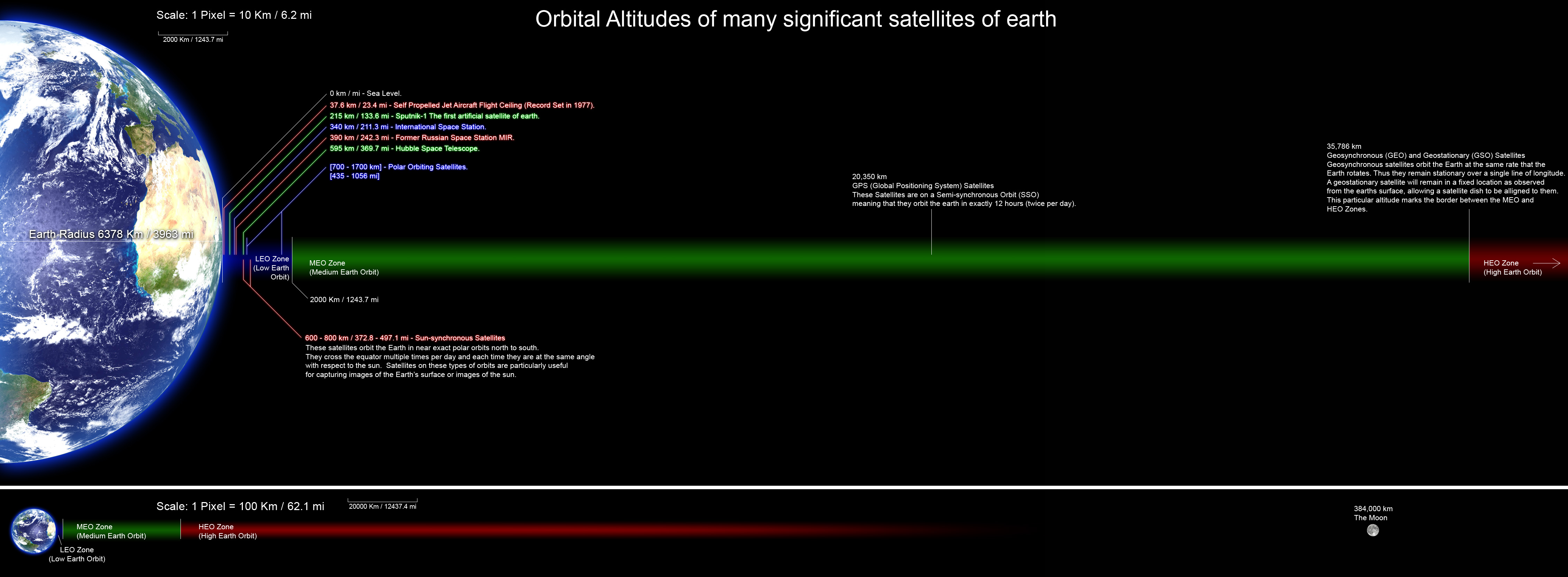
Subscribe to:
Posts (Atom)